
Chapter 1: The Concept of HIV/AIDS
On completion of this chapter you will be able to explain HIV and AIDS.
Chapter objectives are:
- To explain the concepts HIV and AIDS at a basic level of understanding.
- Explain the way in which the immune system works with reference to the role of antibodies and how HIV attacks the immune system.
- Explain the concept of a window period and give an indication of how this affects the accuracy of test results.
- Explain the impact of opportunistic infections on the compromised immune system with examples.
- Outline the stages of the disease with an example of what happens at each stage from infection with HIV to full-blown AIDS and death.
- Outline the relationship between human behaviour and HIV/AIDS and indicate ways in which the individual can avoid contracting or spreading HIV/AIDS with reference to reducing the risk of infection.
1.1 What is HIV and AIDS?
HIV is an abbreviation for Human Immunodeficiency Virus. Like all viruses, HIV cannot grow or reproduce on its own. In order to make new copies of itself it must infect the cells of a living organism. HIV belongs to a special class of viruses called retroviruses.
AIDS (Acquired Immune Deficiency Syndrome) is a deadly disease caused by a virus. The AIDS virus cripples the immune system. A person with AIDS is vulnerable to infections and certain kinds of cancer that take advantage of the body’s lowered ability to fight back. AIDS does not kill directly. Rather, the AIDS virus makes its victims defenceless against other infections that kill them.
HIV (Human Immunodeficiency Virus) is a term for the virus that causes AIDS. HIV is a type of virus that causes a number of health problems ranging from symptom less infection, to changes in the immune system and the development of life-threatening diseases because of lower immunity. ARC (AIDS – Related Complex) is a stage of the AIDS infection where symptoms develop in response to a crippled immune system. It may take years to develop ARC after infection with the AIDS virus. Most people who develop ARC also will develop full-blown AIDS. ARC victims are contagious until the day they die.
Clarifying misperceptions surrounding the HIV and AIDS
How does HIV cause AIDS?
HIV destroys a certain kind of blood cells—CD4+ T cells (helper cells)—which are crucial to the normal function of the human immune system. Studies have revealed that most people infected with HIV carry the virus for years before enough damage is done to the immune system for AIDS to develop. Reducing the amount of virus in the body with anti-HIV drugs can slow this immune destruction. Scientists estimate that about half the people with HIV develop AIDS within 10 years of being infected although this time varies greatly depending on factors like a person’s health status and their health-related behaviours.
How do people get infected with HIV?
HIV is mostly transmitted through semen and vaginal fluids during unprotected sex (sex without the use of condoms). To a limited extent, the possibility of contracting the infections through oral sex also exists if the partner performing oral sex has mouth ulcers. Besides sexual intercourse, HIV can also be transmitted during drug injection by the sharing of needles contaminated with infected blood; by the transfusion, of infected blood or blood products; and from an infected woman to her baby – before birth, during birth or just after delivery.
HIV does not spread through ordinary social contact; for example by snaking hand, travelling in the same bus, eating from the same utensils, by hugging or kissing. Mosquitoes and insects do not spread the virus nor is it water-borne or air-borne.
Self-assessment activity 1.1
Complete the activity in your POE by making use of what you have learnt in Chapter 1.1. Then refer to the Guidelines and Solutions at the end of for suggested answers and solutions.
DO NOT SUBMIT – for self-test purposes only
1.2 HIV and the Immune System
How does the Immune System work?
HIV can enter the body through the sexual organs, the bloodstream and the mouth. Many people experience a flu-like illness a few weeks after being exposed to HIV. A rash may accompany the ‘sero-conversion illness’, ulcers in the mouth, severe headaches, diarrhoea, fevers, aches and pains and swollen glands.
This illness is followed by the development of an immune response to HIV, including the emergence of antibodies, as the immune system brings HIV under control. Not everyone experiences such an illness, but within a few months after becoming infected everyone begins to produce antibodies to HIV.
Inside our bodies there is an amazing protection mechanism called the immune system. It is designed to defend us against millions of bacteria, microbes, viruses, toxins and parasites that try to invade our bodies. To understand the power of the immune system, all that we have to do is look at what happens to anything once it dies. That sounds unpleasant, but it does illustrate something very important about our immune system.
When something dies, its immune system (along with everything else) shuts down. In a matter of hours, the body is invaded by all sorts of bacteria, microbes, parasites… None of these things are able to get in when our immune system is working, but the moment our immune system stops the door is wide open. Once we die it only takes a few weeks for these organisms to completely dismantle our body and carry it away, until all that is left is a skeleton. Therefore, our immune system is doing something amazing to keep all of that dismantling from happening when we are alive.
The Human Immunodeficiency Virus Structure
Outside of a human cell, HIV exists as roughly spherical particles (sometimes called virions). The surface of each particle is studded with lots of little spikes.
An HIV particle is around 100-150 billionths of a metre in diameter. That’s about the same as: 0.1 micron / 4 millionths of an inch / One twentieth of the length of an E. Coli bacterium / One seventieth of the diameter of a human CD4 + white blood cell.
Unlike most bacteria, HIV particles are much too small to be seen through an ordinary microscope. However, they can be seen clearly with an electron microscope.

Figure 1: The Immunodeficiency Virus Structure
Self-assessment activity 1.2
Complete the activity in your POE by making use of what you have learnt in Chapter 1.2. Then refer to the Guidelines and Solutions at the end for suggested answers and solutions.
DO NOT SUBMIT – for self-test purposes only
1.3 The Concept of a Window Period
The HIV window period is usually 3 months for most people. A patient usually develops HIV antibodies 4-12 weeks after exposure, but not all. 99% of all patients will develop antibodies at 3 months. Very rarely does the window period last up to six months. These are very rare cases. HIV tests taken at the 3 month period are considered conclusive, though some patients seek a 6 month check for reassurance. If the patient is under heavy medication, such as chemotherapy, antibodies will take longer to appear. The window period is usually about 3 months but can be up to 6 months. The period to wait to be sure is therefore about 6 months. Now that you have both tested negative at 4 months you can decide if you want to wait or prefer to go ahead but with a condom. Remember however that the condom is not 100% safe as accidents can and do happen. If you have unprotected sex with a person in the window period you have a chance of getting infected.
There is no need to panic as there is a very effective and safe HIV treatment and HIV cure available. A guide is available free which gives out complete information about HIV/AIDS.
http://www.helpcure.com/hiv/
Self-assessment activity 1.3
Complete the activity in your POE by making use of what you have learnt in Chapter 1.3. Then refer to the Guidelines and Solutions at the end for suggested answers and solutions.
DO NOT SUBMIT – for self-test purposes only
1.4 The Impact of Opportunistic Infections on the Compromised Immune System
What are Opportunistic Infections?
An opportunistic infection is an infection caused by bacterial, viral, fungal, or protozoan pathogens that take advantage of a host with a weakened immune system or an altered microbiota (such as a disrupted gut flora). Many of these pathogens do not cause disease in a healthy host that has a normal immune system. A compromised immune system, however, presents an “opportunity” for the pathogen to infect.
Preventing and Treating Opportunistic Infections (OIs)
The best way to prevent OIs is to keep your immune system as strong as possible by taking HIV drugs before your CD4 cell count falls too low (below 200). This allows the immune system to do its job of controlling infections.
If your CD4 cells do fall below 200, taking appropriate medication at certain CD4 cell levels can prevent many OIs from developing. Taking medication to prevent disease is called “prophylaxis.”
Effective treatment options are available in most cases if you do develop an OI. After you recover, you may still need to receive on-going maintenance treatment to prevent the OI from coming back.
You may be able to stop prophylaxis or maintenance treatments if your CD4 cell count goes up. You should not discontinue any treatment without discussing it first with your doctor.
Women and Opportunistic Infections
There are certain sex differences in OIs:
- Men are eight times more likely than women to develop Kaposi’s sarcoma (KS)
- Women are more likely than men to develop bacterial pneumonia
- Women may have higher rates of herpes simplex infections than men
Dysplasia is a pre-cancerous condition in the female reproductive system, It is often more severe and difficult to treat in HIV+ women than in HIV-negative women. Untreated dysplasia can lead to cervical cancer, a life-threatening illness and an AIDS-defining condition.
It is important for HIV+ women to have regular Pap smears and gynaecological examinations to identify infection, dysplasia, or cancer. In addition, HIV+ women should have regular lab tests and appointments with their HIV provider to monitor their health. On-going medical care allows for the effective prevention or early diagnosis and treatment of OIs.
Self-assessment activity 1.4
Complete the activity in your POE by making use of what you have learnt in Chapter 1.4. Then refer to the Guidelines and Solutions at the end for suggested answers and solutions.
DO NOT SUBMIT – for self-test purposes only
1.5 The Stages of the Disease
The stages of the disease are outlined with an example of what happens at each stage from infection with HIV to full-blown AIDS and death.
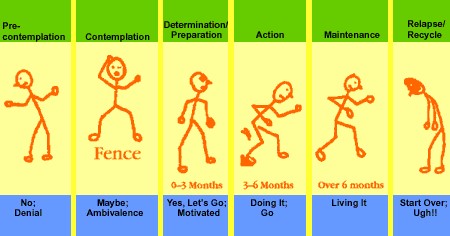
Figure 2: The Stages of the Disease
Stage 1
You are HIV positive and you feel healthy. At this stage, it means your immune system is strong and your CD 4 count is high. You do not need any medication such as Anti-Retroviral Treatment (ART). At this stage it is suggested that you start following a healthy lifestyle, even though it will not kill of the virus, it well help the body cope better with the virus. For advice as to a plan of action call, ‘The Circle of Support Information Helpline’ for help and/or advice on how to deal with these and other HIV & AIDS related issues: 0860 222 777.
Stage 2
You are HIV positive and start to get sick. At this stage your immune system is starting to get weak Ask your health worker to do a CD4 blood test. This will tell you if you need to take Anti-Retroviral Treatment (ART).
Most illnesses that you get when you are HIV positive can be treated. But you must be careful because some of important to visit a clinic or health worker to treat any illnesses you may have.
Stage 3
You are HIV positive and you are very sick with AIDS. At this stage you very sick, very often or you do not get better. It means that your immune systems are very weak. You should get treatment for the illnesses that you have. You should now start taking Anti-Retroviral Treatment (ART) as well.
Stage 4
As you immune systems deteriorate you move into Stage 4. You are HIV positive and you have full blown AIDS. At this stage you are very sick and your immune system has given in, whereby the chances of you ever getting better is less than zero.
Disease Progression
The level of virus in the blood and CD4 cell count can predict the risk of developing AIDS.
Without treatment of any sort, at least 50% of people infected with HIV will develop AIDS within ten years.
In the last few years substantial improvements in treatment have reduced the risk of developing AIDS. The greater the effect of drugs on virus levels in the body, the lower the risk of developing AIDS in the future. No-one knows how long the effects of the new treatments will last, but so far the signs are promising that these effects can be kept up for many years, possibly indefinitely.
This is partly because switching to new combinations is possible if a drug combination fails to keep the virus under control. Specific co-factors may influence the speed at which HIV disease develops:
- People over 40 develop AIDS faster than younger people.
- Inherited genetic factors may influence the speed at which AIDS develops.
- Lifestyle factors such as vegetarian diet, smoking and drug injecting do not appear to influence disease progression.
The amount of experience that a doctor has in treating HIV-positive people may influence the risk of death. If a doctor sees a lot of HIV-positive patients the risk of his / her patients dying is lower.
A very small proportion of people infected with HIV show few signs of immune system damage even after being infected for more than ten years.
These people are called long-term non-progressors or slow progressors. Long-term non-processors have very low virus levels, although the causes of this are unclear. It could be due to a special genetic make-up or the way the immune system responds to HIV.
The process by which a micro organism causes disease is known as pathogenesis. Despite extensive research into AIDS pathogenesis since 1981, large gaps remain in our knowledge of the steps between HIV-infection and the development of AIDS.
A simple concept of pathogenesis is with one factor causing a change in another, which in turn changes another, and so on. For example, A affects B, B affects C, and so on, until Y affects Z (the Z is the end result, such as a disease).
A simple orthodox view of pathogenesis for AIDS is: HIV-infection leads to loss of CD4 cells; this loss of cell-mediated immunity results in increased susceptibility to AIDS-related conditions. In reality there are many more steps in the pathogenesis of AIDS.
There are also human and environmental factors influencing almost every step, and changes in one factor may influence other functions of the body along other pathways.
Self-assessment activity 1.5
Complete the activity in your POE by making use of what you have learnt in Chapter 1.5. Then refer to the Guidelines and Solutions at the end for suggested answers and solutions.
DO NOT SUBMIT – for self-test purposes only
1.6 The Relationship between Human Behaviour and HIV/AIDS
How is HIV passed on?
HIV is found in the infected persons blood (including menstruation blood), breast milk, semen and virginal fluid. During unprotected sex, HIV can be passed into another person‘s blood stream, through the mucous membranes lining the inside of the vagina, penis or rectum. Sex the most common way for the HIV virus to be passed on is when a person has unprotected sex (sex without a condom) with someone who already has the virus.
Blood
The HIV virus can pass from a person who has it to another person if they share needles and syringes that are not properly cleaned. It can also be passed on if they both have a cut or a wound and their blood get mixed. Sick people may be given extra blood through a blood transfusion. In South Africa blood transfusions are safe because all blood is tested for HIV before it is given to anyone.
Pregnancy and Breast-Feeding
A pregnant women who has the HIV virus can pass it on to her baby when she is pregnant, gives birth or breast-feeds. About 1 in every 3 babies born to HIV-Positive mothers will get the HIV virus if the mother and the baby do not take medicine to stop this happening. Babies who have the HIV virus get sick often. They usually die when they are very small. If you are HIV positive and pregnant you may get sick with AIDS more quickly.
Nevirapine
Pregnant women normally take Nevirapine during labour. Nevirapine is a medicine that lowers the chances of passing the HIV virus from the pregnant woman to her baby. The new born baby in turn must also be given a small amount of Nevirapine within the first 3 days after birth. Babies take it in syrup form so it is easy to swallow.
Safe vs. Risky Behaviour
What is a Sexually Transmitted Disease (STD)?
Sexually Transmitted Disease (STD) is a disease caused by a “pathogen” (virus, bacterium, parasite, fungus) that is spread from person to person primarily through sexual contact.
An estimated 200 to 400 million people worldwide are infected. STDs can be painful, irritating, debilitating, and life threatening. More than 20 STDs have been identified. Women suffer more frequent and more serious complications from STDs than men. Some STDs cause no symptoms, but can still be passed from person to person even if there are no symptoms.
STDs occur most commonly in sexually active teenagers and young adults, especially those with multiple sex partners. Each year, one in four teens contracts a STD. One in two sexually active persons will contract a STD by age 25.
About half of all new STDs occur among youth ages 15 to 24. According to the South Africa’s Department of Health and Human Services, in South Africa more than 13 million people are infected each year and more than 65 million have an incurable STD.
The only sure ways to avoid becoming infected with an STD are abstinence or monogamy with an uninfected partner. It is important for partners to discuss their sexual and STD history before having sex. Prevention is possible only if sexually active individuals understand STDs and how they are spread.
Does the presence of other sexually transmitted diseases (STDs) facilitate HIV transmission?
Yes. Every STD causes some damage to the genital skin and mucous layer, which facilitates the entry of HIV into the body. The most dangerous are:
- Syphilis
- Chlamydia
- Genital herpes
- Gonorrhoea
Why is early treatment of STD important?
High rates of STD caused by unprotected sexual activity enhance the transmission risk in the general population. Early treatment of STD reduces the risk of spread to other sexual partners and also reduces the risk of contracting HIV from infected partners. Besides, early treatment of STD also prevents infertility and ectopic pregnancies.
HIV/AIDS AIDS affects people primarily when they are most productive and leads to premature death thereby severely affecting the socio-economic structure of whole families, communities and countries. Besides, AIDS is not curable and since HIV is transmitted predominantly through sexual contact, and with sexual practices being essentially a private domain, these issues are difficult to address.
How to Practice STD-Free Sex
STD-free sex is the act of protecting against sexually transmitted diseases (STDs). Practicing STD-free sex means knowing the facts about STDs and following certain rules of conduct that can greatly reduce the chance of infection.
By practicing STD-free sex, you can eliminate the risky behaviours that cause transmitting STDs between sex partners. The result is a physically healthy and worry-free sex-life.
What to do if you have a STD
ANYONE who has sexual contact with someone else can get a STD. Tests and examinations by a doctor are the only way to tell for sure if you have a STD. Telephone several offices or clinics and ask questions about the types of services and tests they offer. Ask about costs and methods of payment.
The tests may be free, but there may be a charge for the visit. The doctor will ask questions about your medical history, general health and sexual activity. The doctor will examine your genital area. Women will have an internal pelvic exam. Samples of blood and body fluids may be tested. Medicines may be prescribed. The exam will also include education about STDs, counselling about how to use the medicines correctly and how to help your sex partner(s) who also may be infected.
Risky Behaviour
Either abstaining from sex or having a totally monogamous relationship is the best way to avoid HIV. There are some activities that are thought to be associated with risk from HIV.
Minimal Risk of spreading HIV includes:
- dry kissing
- cuddling
- touching
- masturbation
- massage
Low Risk of spreading HIV includes:
- Urine
- Sweat
- Saliva
- Tears
Using a condom makes all kinds of intercourse safer because the condom stops sexual fluids passing from one person to another. Even the least effective condoms offer a protection factor of over 10,000 compared with unprotected sex. However, there are concerns that condom use is limited by the fact women do not have control over their use. The female condom does provide protection against HIV, but they are more expensive than male condoms and are perceived to be messy.
Women
Women are at particular risk worldwide. Currently in South Africa, one in three new cases of HIV occur among women. It is thought hormonal changes during the menstrual cycle can alter the levels of membrane co-receptors for HIV, making it easier for the virus to infect cells. Any vaginal infections or minor ulcerations and sores can also greatly increase the risk of becoming infected with HIV.
Homosexual Relationships
Unprotected anal intercourse for men or women carries a very high risk of HIV spread.
Public Health Agencies advise oral sex to be a relatively low risk activity providing there are no cuts, sores or bleeding gums in the mouth. And oral-anal sex (rimming), wet kissing and mutual masturbation to be very low risk.
However, recent evidence raises the possibility that perceived low-risk sexual activities might carry a higher risk than previously thought.
A study of 1500 HIV negative homosexual and bisexual men in America have found that only 15 percent of new infections were linked to unprotected anal intercourse. So-called “lower-risk” activities such as oral sex and protected anal sex with a condom were major risks for HIV transmission. Although a given sexual practice may be considered low risk, the risk is never zero.
Injecting Drugs
Injecting drugs is the second highest risk factor for getting infected with HIV. Transmission of HIV through using needles has a flow-on effect because sexual partners become infected, followed by children whose mothers have been infected. HIV can be spread if drug users share their needles, syringes, spoons and filters. Using clean needles and syringes reduces the risk substantially. Clean needles can be obtained through needle exchange programmes in most cities.
Skin Piercing
The needles used in tattooing, ear piercing, electrolysis and acupuncture carry no risk of HIV if they have been sterilized, or if new ones are used each time. Ask about sterilization before you have the treatment.
Self-assessment activity 1.6
Complete the activity in your POE by making use of what you have learnt in Chapter 1.6. Then refer to the Guidelines and Solutions at the end for suggested answers and solutions.
DO NOT SUBMIT – for self-test purposes only